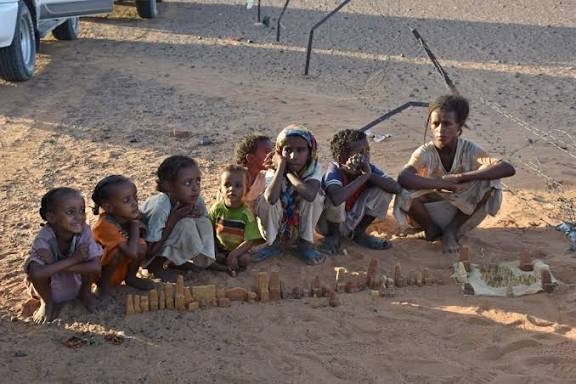
Five Orphans of Sudan
Kingsley Bassey Ukpong@kingsleybasseyukpong131493
20 days ago
They told us once the sky was a playground,
a blue that kept its promises like a mother.
We learned to fly paper birds on afternoons,
to thread our names into string and let them go.
Now the sky is a ledger of smoke; the kites hang like questions
from the ribs of telephone poles.
We are five small hands that remember how to laugh,
five mouths that still know the taste of mango hope,
but the streets have taught us other languages:
the hush of curfews, the grammar of checkpoints, the arithmetic of hunger.
Amina kept a sun in her pocket once, a coin of light she pressed
to the hollow of her palm and called it future.
She would trade it for a story, for a chalk star on a blackboard,
for the smell of bread before dawn.
War taught her how to fold that sun into smaller suns,
how to hide it beneath a rag when soldiers passed.
She speaks in the soft voice of someone who counts quietly:
“Tomorrow is a promise I fold like paper; sometimes it rips.”
Her laughter is a brittle bell; her hands are maps of errands
fetch water, mend a shoe, barter a secret for a crust.
She still hums the lullaby her mother hummed, but the tune
has holes where the words used to be.
Tariq’s kite had a name: Freedom.
He painted it with a father’s handwriting and a brother’s grin.
When the shelling came, the string snapped and the kite fell into a field
where the grass remembers footsteps like prayers.
Tariq learned to make new strings from wire and old rope,
to climb the roofs and watch the city breathe in smoke.
He speaks askance, as if the world owes him an explanation:
“Why does the sky forget to be kind?”
His eyes keep the geometry of loss - angles of rooftops, the slope of a ruined wall
and still he tries to teach other children how to fly a kite with no tail.
Sometimes the wind takes the kite and brings back only a scrap of color;
sometimes it brings back a name.
Leila counted mangoes like prayers, one for each day she believed.
She could name the sweetness of a season before it arrived.
War turned seasons into rumors; mango trees became skeletons
that offered shade to no one.
She keeps a pocketful of seeds - small, stubborn futures
and plants them in the cracks of bombed courtyards.
She speaks in the language of small rebellions:
“I will grow an orchard from the ash of this street.”
Her hands are patient; she knows how to coax life from dust.
When she laughs, the sound is a small bell in a ruined church;
when she cries, the tears water the seeds she will not let go.
Musa learned invisibility like a craft: how to step between boots,
how to fold his hunger into a neat square and hide it in his chest.
He knows the market’s rhythm - the barter of bread for a joke,
the way a smile can be currency.
He speaks in dejection, not because he has given up,
but because he has catalogued the world’s refusals:
“People look through me as if I were a window with no glass.”
Yet he collects small mercies: a woman’s leftover stew, a teacher’s wink,
a scrap of paper with a letter that says, simply, Learn.
Musa’s shadow is a companion; sometimes it is the only hand
that reaches for him at night.
Hana kept a drum that had no skin, only the memory of sound.
She would beat it with a stick of hope and call the neighborhood to supper,
to story, to the small rituals that make a life.
War stole the drumheads and the elders who knew the rhythms,
but Hana kept the cadence inside her ribs.
She speaks in a voice that is both question and command:
“Who will teach us the names of peace?”
She stitches rhythms into the hems of other children’s clothes,
teaches them to clap in time with the heart’s slow insistence.
When she marches, the pavement listens; when she stops, the city exhales.
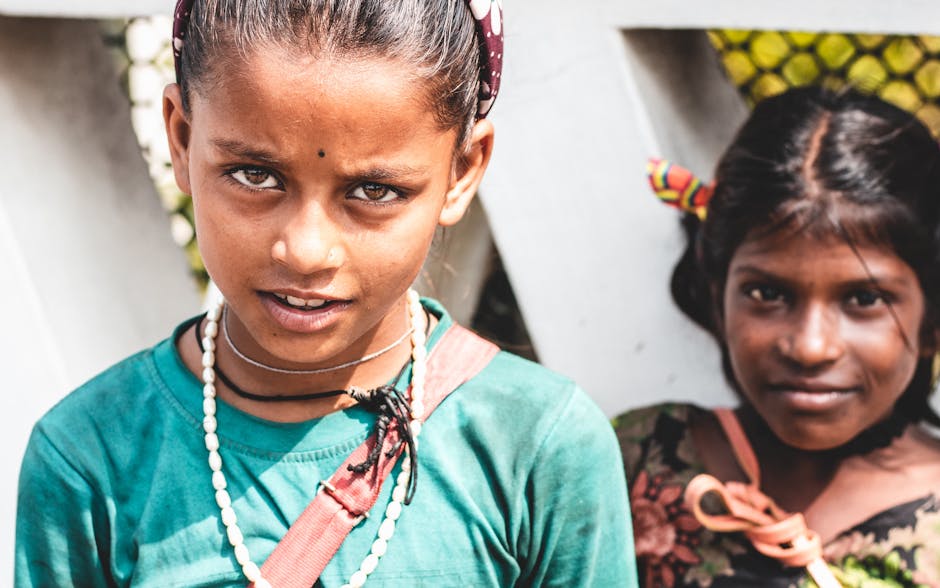
We are five small fires in a city that forgets how to warm.
We have the mouths of children and the patience of old saints.
We ask for nothing more than the ordinary: a school bell, a mango, a roof.
We ask in the language of those who have learned to be careful with words:
not pity, not charity that tastes of spectacle, but hands that teach, eyes that stay.
We remember lullabies and the geometry of playgrounds; we remember the way rain used to fall
like a blessing and not a rumor.
We also remember the sound of boots, the taste of dust, the way a neighbor’s door closes
and does not open again.
Once we chased goats and kites and the sun; now we chase the last bus home.
Once our pockets held marbles and secrets; now they hold coins that buy silence.
Joy is a small animal we keep in the ribs - soft, quick, easily frightened.
War is a slow machine that eats the edges of childhood: the playground becomes a field of shells,
the school a rumor, the teacher a ghost who writes lessons on the wind.
We learn to fold our birthdays into the lining of our coats; we learn to celebrate with whispers.
When a child laughs, it is a scandal of light; when a child cries, the city files the sound away.
Our hunger is a ledger with no bottom; our names are stamps on a lost letter.
Hope is a coal we hide under our tongues; despair is a coat we wear when the nights are long.
The river that once laughed at stones now carries messages of absence.
The moon is a stranger who sometimes looks away; the sun counts its losses and keeps them in its pocket.
We are seeds in concrete, stubborn and small; we are embers that refuse the wind.
We stitch quilts from torn flags and call them maps; we teach the world how to listen to broken clocks.
There are bargains made in the dark that smell of oil and old promises.
There are doors that open only to the sound of coins; there are names that vanish like smoke.
We learn the economy of fear: how to trade a secret for a night’s shelter,
how to sell a laugh for a loaf.
The city keeps a ledger of favors owed and never repaid; the entries are children’s birthdays.
Sometimes a neighbor’s kindness is a currency with a hidden tax.
We learn to read the faces of men who have learned to forget their own children;
we learn to count the ways a world can look away.
Amina teaches a child to tie a shoelace; Tariq mends a kite with wire;
Leila plants a seed in a crack; Musa reads a letter aloud; Hana drums a rhythm that wakes the street.
These are small rebellions against the arithmetic of war.
They are the quiet economies of care: a bowl shared, a story kept, a promise whispered.
We barter hope in the market of the impossible and sometimes it buys us a morning.
We do not ask for pity; pity is a mirror that shows only what you already know.
We ask for hands that teach, mouths that speak truth, eyes that will not look away.
We ask for the ordinary miracles: a school that rings, a field that is safe to run in, a roof that does not tremble.
We ask for the right to be more than a footnote in someone else’s history.
We will not be the sentence that ends a paragraph; we will be the sentence that changes it.
War keeps its accounts in children’s names.
It tallies the small things - mangoes stolen, kites cut, lullabies interrupted - and calls them collateral.
It teaches men to measure courage in the weight of a gun and forget the weight of a child’s hand.
It makes treaties with silence and signs them with ash.
Yet even in its ledger there are mistakes: it underestimates the stubbornness of seeds, the persistence of small fires.
We imagine a village of light built from the embers we carry.
We will stitch torn flags into quilts and hang them from windows like new constellations.
We will teach the sun to return what it has taken; we will teach the moon to look again.
We will plant orchards where shells once lay; we will teach children to count mangoes like prayers.
We will make a school from the ribs of storms and fill it with the songs our mothers hummed.
We will carry our small flames across borders and barricades and plant them in the soil of every heart that will hold them.
Listen: we are five voices braided into one rope of sound.
We are not only hunger and ash; we are also the stubborn music of mornings.
We will not vanish into the footnotes of history.
We will name ourselves beloved, not because the world has given us that name,
but because we have learned to give it to one another.
If peace is a bliss the world has forgotten, we will teach it the alphabet of mercy.
If war is a ledger of losses, we will write a new account - one that counts gardens, school bells, and the sound of kites.
We are small. We are many. We are the sentence that changes the paragraph.
We will make a miracle from a spark.
#poetry
#followme



15 days ago
14 days ago